
累计向各方提供
影像赋能资金63万元
The "Pioneer Program", as the first nature conservation imagery empowerment initiative of Silverlining Conservation, aims to build a bridge connecting conservationists and visual creators. Through funding and collaborative creation, the program produces impactful nature conservation imagery works, driving the discovery and resolution of specific conservation issues.
Pioneer Program
已持续三届
累计扶持保护项目共13个


by Heilongjiang Environment Protection Education Institution
Salmon is an indicator species and umbrella species in northern rivers; The migration of salmon has nourished the earth, animals and plants, and northern peoples for tens of millions of years. It was tracked in 2/3 of the watershed of Heilongjiang and Jilin provinces, mainly being found in the China-Russia and China-Korea boundaries. Currently, salmon migration and their spawning can only be found in some watersheds of the Suifen River, the Mijiang River, and the Tumen River.
Our organization initiated the welfare project of Bringing Chinese Salmon Home in 2015. Over the past eight years, we have continued to promote policy advocacy during the fishing ban period, on-site protection of spawning grounds, and improvement of the survival rate of breeding and releasing fish. At the beginning of 2021, the Masu salmon was listed as a national second-class protected animal; in 2022, a fishing ban was implemented during the salmon migration period in the Suifen River waters. After that, we saw that the migration distance of the Suifen River salmon extended, the Masu salmon population increased, and the density of the salmon population in the Tumen River Basin also increased significantly. However, due to the small number of domestic salmon migration populations, low visibility in some waters, and the difficulty of underwater photography, there has been a lack of salmon image data in the wild in China. When we use the images, we can only rely on the materials authorized from abroad.
Under the sponsorship of the "Pioneer Plan by Silverlining Conservation " and in collaboration with professional underwater photographer Wu Lixin, a year-long project was conducted to track and photograph salmon and other fish species in the Suifen and Tumen River basins. We will make them into videos for the public, and let people know about rare fishes such as salmon and the threats they face. We try to use the images to protect salmon and other fish.
by Jiajun Zhou
Project: China is the country with the richest cavefish diversity in the world. China's cave fishes are mainly distributed in the karst landform areas of southwest China, including the Nanpanjiang-Hongshui River basin in the middle and upper reaches of the Pearl River system, and parts of the Yangtze River and Red River basins. China's cave fishes have the characteristics of high species diversity, strong species differentiation, narrow distribution range, and small population size. Because they inhabit the extremely special cave underground river, cavefish have extremely poor adaptability to environmental changes, and can easily cause population decline or even extinction due to environmental damage. The underground rivers are polluted by domestic garbage and sewage that will threaten cavefish’s survival and reproduction. At the same time, most people near habitats lack awareness of protection and the ability to identify. The large-scale consumption of cavefish has also caused irreparable damage to rare and endangered resources in some areas.
In 2021, the eyeless ridge loach, Xiangxi blind plateau loach, naked-bellied barbel, and all fish of the genus golden-threaded loach were added to the list of national key protected wild animals. However, due to the lack of image data, the publicity work has not been implemented, these protected cavefish are still suffering severe resource damage. The public will not be able to form an intuitive understanding of protected species and the significance of protection without clear species imaging data, which means the protection work will encounter great resistance, and grassroots managers and policy enforcement officers will not be able to implement the work. Therefore, the collection and dissemination of cavefish species images are very important and needs to be promoted as soon as possible.
Through image recording, research collaboration, and popular science dissemination, the project will let the government and the public understand the rare and endangered cavefish that are unique to the karst areas of southwest China, which is under national key protection. Use the images to show the charm of underground river creatures, the environment and ecosystems in caves, and the threats that the cave fish suffer. Eventually, the project will raise public awareness of the protection of the karst areas and the endangered cave fish.
by Yibin Li
Historically, dholes were widely distributed in most regions in our country. However, in the past 30 years, dholes in China have experienced serious population decline and distribution area reduction. Dholes preyed on livestock and were poisoned or hunted in retaliation. Domestic animals carry widespread contagious diseases to dholes (such as canine distemper and rabies), which may be the main reason (Liu Shaoying 2019). Today, the distribution of jackal habitats has been very narrow, and there are only a few accurate records in the West. In most areas of East, Central, and South China, dholes may have been regionally extinct (Kao et al. 2020).
The area where the project is located is the northern foot of the western section of the Qilian Mountains, east of the Yanchiwan Nature Reserve in Gansu Province. The main local industries are animal husbandry, mining, and oil production. Human activities are relatively frequent, and no protection for wild animals has been taken. The local dhole population faces threats such as retaliatory hunting caused by livestock predation and severe infectious diseases spread by domestic dogs. In addition, human interference in the project area is significant, but it has not yet been scientifically evaluated. The impact of human activities caused by the local dhole is also unclear. Relevant investigations and protection publicity are urgently needed.
In June 2022, the applicant captured precious images of a group of dholes raising their young babies in the Hanxia Petroleum River area. For the research and protection of dholes and snow leopards in the Hanxia Oil River area, two projects are currently being implemented, namely the "Assessment and Protection Exploration of Dhole Population Status in the Hanxia-oil River at the Western End of Qilian Mountains" funded by the Zhilan Foundation and "Assessment of Snow Leopard Population Conservation Status in Jiuquan Hanxia-Shiyouhe Area, Gansu Province" funded by the Tencent Charity Fund and the Society and Shanshui Nature Conservation Center. Through the implementation of field surveys and interviews with herdsmen in the above two projects, we have gained a preliminary understanding of the distribution and activities of dholes in the area, as well as potential herdsmen’s photographic subjects. The preliminary work provided a good foundation for photography.
This project will cooperate with the ongoing scientific research project to take images of jackals and associated species in the Dry Gorge-Shiyou River area at the northern foot of the western section of the Qilian Mountains, record the relationship between local herdsmen and dholes, and explore the threats to dholes. The project expects the government and the public to understand the living status of dholes and call for conservation actions.
by Wild Xinjiang
Dhole is under first-class national protection in our country. We particularly pay attention to the "Northern Dhole", which historically lived in the Altai Mountains, Tianshan Mountains, and the Kunlun Mountains in Xinjiang. There has been no trace of dholes in the Altai Mountains and Tianshan Mountains for many years, and they are almost "extinct in the wild" in the neighboring countries such as Mongolia, Russia, Kazakhstan, and Kyrgyzstan. However, during our field surveys, we found that there is a continuous existence in the Kunlun Mountains in the Hotan area. We see a dhole landscape, with the population of dholes rapidly recovering and spreading. The local Uighurs call it Qugai, and the Tajiks call it Ajiu. The Altyn Mountains-Kunlun Mountains in Xinjiang may be the last "reservation area" for jackals in Xinjiang.
In this project, we will tell the species protection story of the Last Dholes in the Kunlun Mountains-Qilian Mountains, a spatial scale spanning 2,200 kilometers through an in-depth and influential image and text. The story will reflect the relationship between the last northern jackal and the local area. The stories of different ethnic groups and dholes are used to reflect the local geography and humanities, and arouse people’s attention to northern jackals.
by Snowland Ecological Conservation and Education Research Center, Qinghai Province
In recent decades, human-bear conflicts in the Sanjiangyuan region have intensified, becoming one of the most widespread and urgent conservation conflicts on the Qinghai-Tibet Plateau. Since 2021, Snowland has been working in Dongba Township, Nangqian County, to mitigate human-bear conflicts. This involves implementing comprehensive solutions through community co-governance and decision-making, including post-conflict compensation through community insurance funds, bear prevention awareness campaigns, training, and efforts to increase herders' tolerance toward brown bears. The mitigation approach is not merely about physical interventions, as the root cause of human-wildlife conflicts lies in deficiencies in wildlife management and differing value judgments and resource utilization among various stakeholders.
The project plans to produce a documentary that captures the current severity of human-bear conflicts, exploring how herders affected by bear incidents perceive the issue—their understanding of bears, concerns for their own and their families' safety, and how these challenges manifest in their daily lives. The documentary will also highlight Snowland's efforts in addressing human-bear conflicts, collaborating with local communities, monasteries, and social organizations to tackle the problem. Through this documentary, we aim to shed light on the real-life conditions of local herders, their attitudes toward brown bears, and their anxieties about human-bear conflicts.
by Hangzhou Yuanxiang Wilderness Ecological Conservation and Research Center
Jintang Island in Zhoushan, Zhejiang, may have the highest otter density in Zhejiang Province and even all of China. Almost every river and canal on the island shows signs of otter activity, yet few local residents have ever spotted them. What kind of secretive lives do these otters lead here? We aim to use diverse visual documentation methods to understand various behaviors of Jintang otters, such as courtship, parenting, and territorial disputes, and to explore how they manage to live covertly on an island with a permanent population of 50,000.
Direct Threats to Jintang Otters: illegal fishing using electric methods and overharvesting of aquatic resources.
Indirect Threats: potential for human-wildlife conflicts.
As a highly adaptable and widely distributed species, otters are likely to experience a widespread population recovery across China in the future. Jintang, being a leading area in otter population recovery, holds significant research value. It can serve as a valuable model for otter conservation in urbanized regions.
Xu Tan
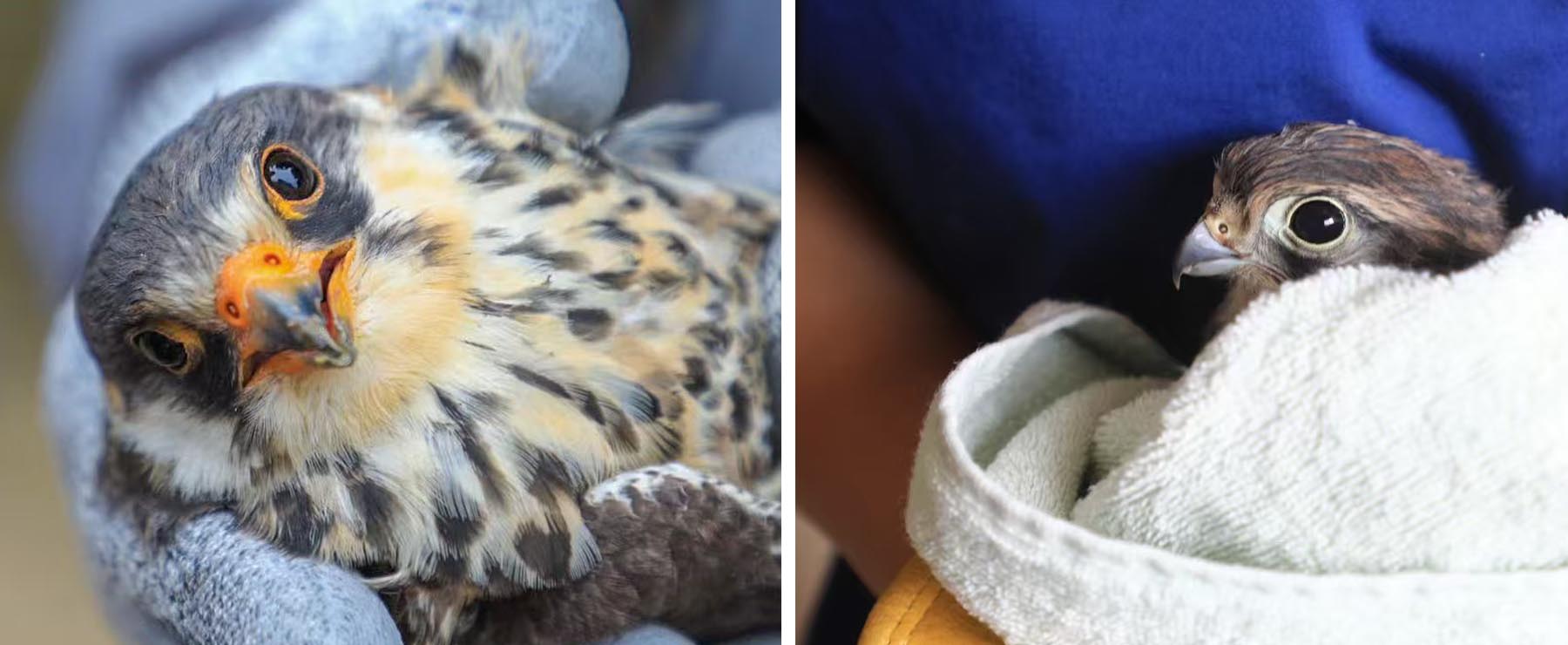
Using imagery to enhance public scientific understanding and rescue capabilities regarding urban raptors. The focus is on all raptor species in the Beijing area, including Accipitriformes, Falconiformes, and Strigiformes. The ecosystems involved include urban buildings, green spaces, and suburban farmlands-areas with frequent human activities.
Threats to Conservation: When encountering injured or fallen raptors, the public may harm themselves due to a lack of understanding of raptor behavior.
Due to insufficient awareness of raptor protection levels, some individuals may take raptors home for private care, or even harm, trade, or consume them.
During the breeding season in spring and summer, the high incidence of fledgling raptors falling from nests often leads to improper rescue attempts by the public, resulting in injuries or preventing the young birds from reuniting with their parents.
Importance of Raptors: As apex predators, raptors play a crucial role in maintaining ecological balance. Beijing, the capital of China, is a key node on the East Asian raptor migration route, hosting over 50 recorded raptor species (including owls), accounting for nearly half of the country's total. Additionally, Beijing is one of the most populous cities in China and a hub for birdwatching and bird photography enthusiasts. There is an urgent need to educate the public on how to respond when encountering raptors in need of rescue.


中科院南海所西沙站霍达、吴立新
大多数海草床位于潮间带至潮下带,极易受到人类活动的影响。目前水体污染和海岸带的开发是海草床最主要的两个威胁因素。
海草床虽然具有重要的生态价值,且受威胁严重,但在世界范围内的公众关注度、研究投入均较低,甚至在很多管理决策中也常常被忽略,以海草床为保护对象的海洋自然保护区面积和数量占比也少之又少。
国内目前缺乏体现海草床生态价值的优质照片,相关专题纪录片更是十分稀少,因此通过影像的方式让海草床进入大众视野,十分迫切且必要。
王浩 & 周佳俊
中国拥有全球最广泛的喀斯特地貌,地下洞穴系统复杂多样。洞穴环境黑暗、恒温恒湿、营养贫瘠,演化出高度特化的生物类群,许多物种为中国特有或濒危,具有极高的科学价值。
过去因技术限制和洞穴可达性差,大量洞穴生物未被记录,生态研究滞后。同时,人类活动和气候变化威胁洞穴生态,亟需摸清物种家底并制定保护策略。
本项目将运用影像记录、科研协作与科普传播三位一体的方式,架起政府与大众认知中国西南岩溶秘境洞穴生灵的桥梁;深度揭示脆弱生态系统面临的生存危机;激发全民生态自觉,凝聚公众守护喀斯特地质遗产与濒危洞穴生物的家园力量。
黑龙江省环境保护教育学会
在万物影像保护先锋计划第一期的资助下,吴立新实地拍摄到密江河陆封马苏大马哈鱼种群恢复状况,为保护工作成效提供直观依据,政府计划携手企业于珲春其他河流建设大马哈鱼放流站,全力恢复种群资源;通过航拍滚水坝拦河实况及河道取石现场,推动州渔政开展拦河坝整改工作,叫停非法采砂。此外,上期拍摄成果打破团队对大马哈鱼属孵化繁育的传统认知,发现卵黄囊苗后期具备进食能力,这一重大发现为人工繁育工作提供了关键指导意义。
中国大马哈鱼与下游俄罗斯是统一水域统一种,本项目将到俄罗斯拍摄洄游、产卵及周边环境的素材,作为中国大马哈鱼保护的参照。通过影像及科普文章的发布,呼吁社会各界携手守护这一珍贵的生物资源。
重庆江北飞地猫盟生态科普保护中心、王烁
山西省和顺县是一个坐落于太行山腹地的小县城,周边山区分布有太行山的华北豹核心种群,成年个体数量约40只左右。
近年来随着新能源项目的不断引入、公路的升级改造等基建开展,对山区野生动物的栖息地带来影响。野生动物在不断尝试适应人类的活动,但路杀、个体迁移、种群退缩等现象均有所体现。当地野生动物的保护仅靠保护区已经不足以充分保障,保护地之外的动物保护成为当地野生动物急需的保护手段。
本项目旨在是使用影像手段,记录下豹、赤狐、狍、豹猫等当地多种野生动物如何与人类共存,并结合文字表述来展现人类活动对其的影响。以精彩的视觉表现来触达本地居民及外界公众,推动共存意识的认知,并用于在地保护机构的筹款。
广西科学院罗杨、广西山河海自然保护基金会、一草一木(成都)
北倭蜂猴是一种被IUCN红色名录列为濒危的古老灵长类动物,由于树栖、独居和夜行性的习性,其野外生态学研究长期空白,导致针对性保护策略难以制定。
2021年,广西弄岗国家级自然保护区首次记录到北倭蜂猴。2023年10月至2024年9月,在广西山河海保护基金会的支持下,保护区陇瑞片区的护林员通过夜间调查,共记录到88只个体,所有记录均配有GPS定位和影像(照片或视频)作为物种确认依据。然而,夜间调查中常遇到目标动物可见但难以拍摄的情况,严重影响种群统计和生态学研究。
为提高调查效率,本项目计划购置专业夜间拍摄设备,并对护林员进行夜间观测与拍摄技术培训,以获取更清晰的北倭蜂猴活动影像,为后续种群监测、行为研究和保护管理提供科学依据。
北部湾鲸豚研究团队(广西二豚子文化创意产业旅游开发有限公司)
中华白海豚栖息的陆海交汇带是生物多样性高、生物量大、人为活动多的海岸生态系统,然而这个生态系统所受到的保护关注度却很低。
主要面临的保护威胁有:
(1)非法/不可持续渔业;(2) 栖息地质量退化;(3) 密集的船只活动。
本项目通过一系列短视频和纪录片的拍摄,呈现北部湾陆海交汇带的生物多样性、生态系统和人为活动,通过一系列网络和自然教育活动的传播,引导公众更加科学理性的关注这个生态系统的保护,推进人与自然连结。


